EN
 English
 русский
 Español
 عربى

A bathroom wall that stays damp after every shower, or a meeting room where every conversation echoes off bare plaster, usually comes down to the same problem: the surface absorbs water or reflects sound. WPC wall panels address both. WPC stands for wood plastic composite, a material that blends wood fibre with thermoplastic resin to deliver the warmth of timber with much better tolerance for moisture and far less maintenance. Whether you are planning an outdoor wpc wall panel for a terrace or an interior feature wall, the decisions you make about material, profile and fixing method will determine how the finished wall performs for years.
This guide explains what WPC panels are made of, compares the main product types, reviews the real benefits and limitations, shows how the panels compare with solid timber and gypsum board, and walks through selection and installation. Each part can be read on its own, so you can jump to the section that matches your project.
What Are WPC Wall Panels Made Of?
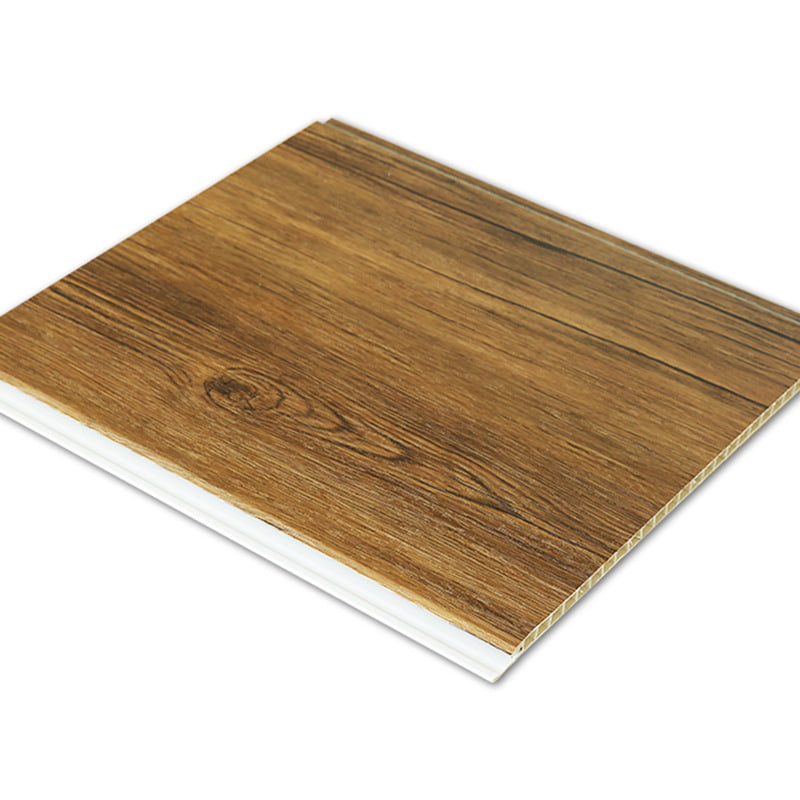
WPC wall panels are engineered boards produced by blending finely ground wood fibre or wood flour with a thermoplastic polymer, most often polyethylene, polypropylene or PVC, and a package of functional additives. The mixture is heated, extruded or pressed into a profile, then cooled into a dense board whose colour runs through the full thickness. Because the colour is not just a surface layer, small scratches and chips are far less noticeable than on a painted panel.
Each ingredient plays a specific role in the finished board:
Wood fibre or wood flour gives the panel its natural texture, stiffness and grain appearance.
The thermoplastic resin forms a continuous matrix that blocks water penetration and prevents rot.
Additives such as UV stabilisers, colourants, lubricants and sometimes foaming agents control weathering resistance, appearance and weight.
typical interior panel thickness
common board widths
typical standard lengths
water absorption compared with untreated timber
Compared with solid timber, WPC does not swell, split or warp in the same way when humidity changes, because the fibres are locked into a plastic matrix rather than free to expand and contract. Compared with gypsum board, it is far more forgiving: gypsum softens when wet and needs repainting or replacement after water damage, while WPC can be wiped clean and keeps its shape. The trade-off is that WPC is heavier than most gypsum boards and must be cut and fixed with tools suited to composite materials.
Main Types of WPC Wall Panels
WPC wall panels are sold in several families, each designed around a particular job. Choosing the right family matters more than choosing a colour, because the profile, backing and fixing method all change with the application.
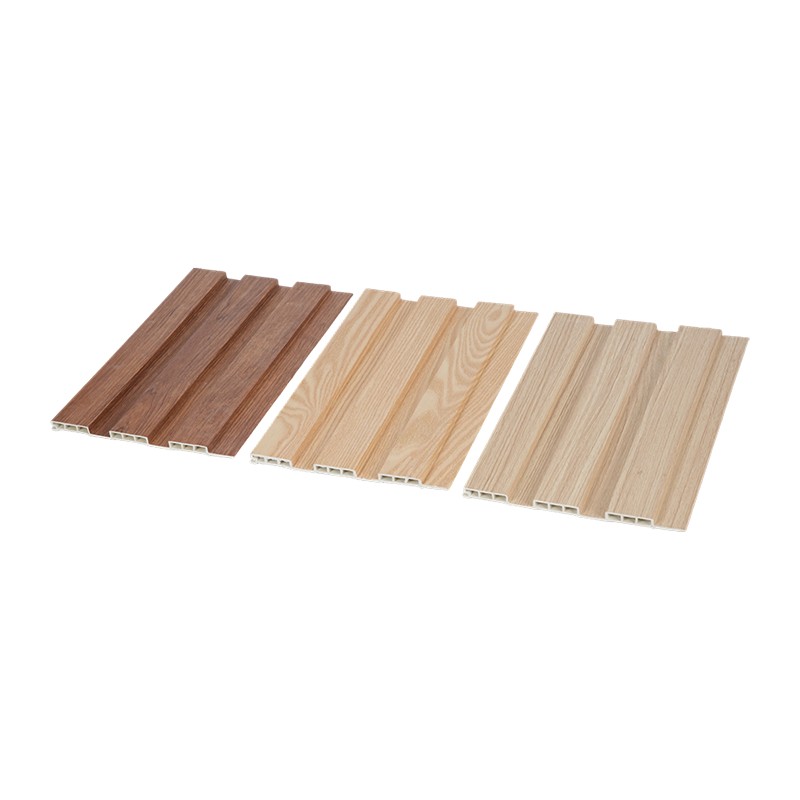
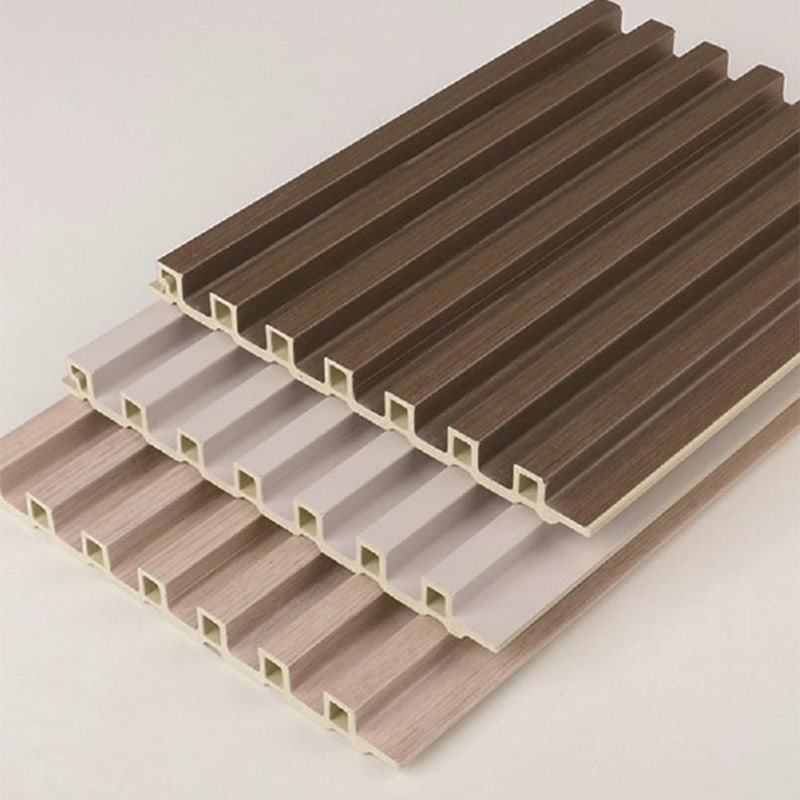
WPC Fluted Wall Panels
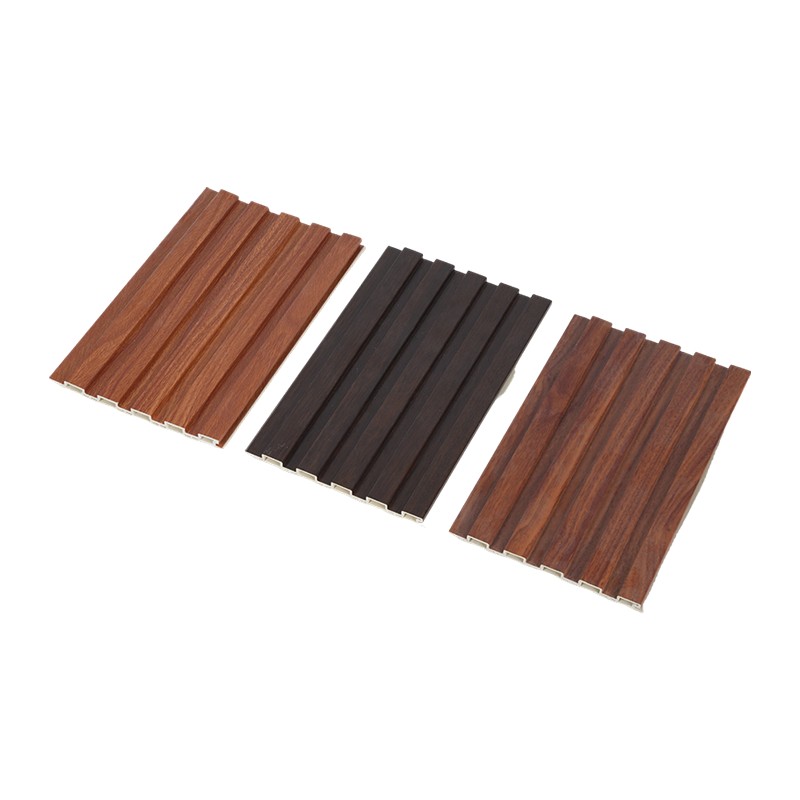
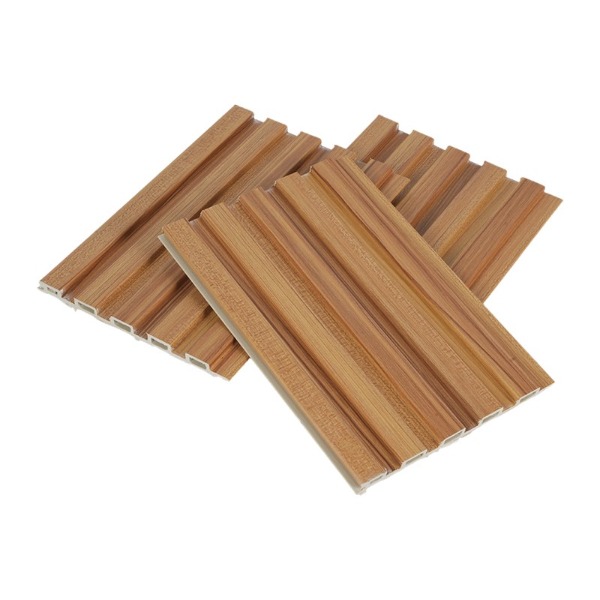
Fluted panels carry vertical grooves or ridges across the face. The grooves catch light and create shadow lines that make a flat wall look dimensional. They are the most popular choice for living room feature walls and TV backdrops. A common format is a board roughly 200 to 250 mm wide with a groove depth of 15 to 20 mm. Narrow flutes suit small rooms because they add texture without overwhelming the space, while wider, deeper flutes read as bolder and work well in large open-plan living areas.
Acoustic WPC Wall Panels
Acoustic panels use a perforated or slotted face with a sound-absorbing layer, usually acoustic felt or mineral wool, behind it and a small air gap between the two. Sound enters through the openings, and the absorbent layer converts part of its energy into heat, which shortens the reverberation time of the room. This makes acoustic models a practical choice for offices, meeting rooms, classrooms and home recording spaces. When comparing products, look for test data on sound absorption, often expressed as a noise reduction coefficient, and check how the panel was tested, including the depth of the air gap.
Perforation pattern and open area determine how much sound reaches the absorbent layer.
Backing material controls absorption across low, mid and high frequencies.
Air gap depth shifts which frequencies are absorbed most effectively.
Exterior Cladding and Moisture-Resistant Panels
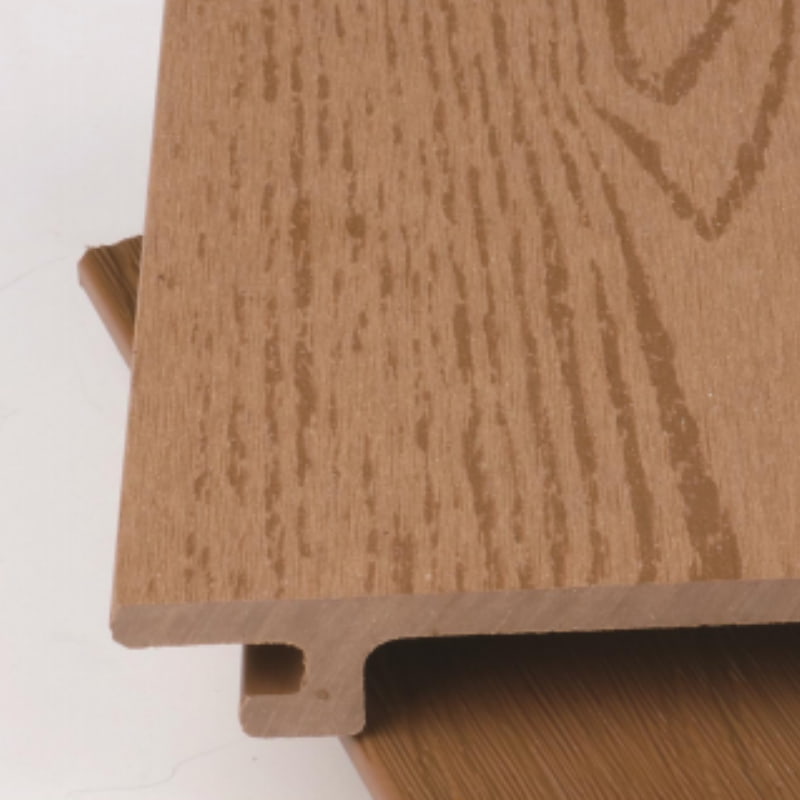
Panels designed for exterior use carry stronger UV stabilisers, deeper colour pigments and often a textured surface that hides weathering. They are used for fences, entrance walls, balcony cladding and garden feature walls. Exterior products should be fixed with stainless or coated fasteners, and joints need to be planned so that water runs off rather than collecting behind the boards.
Key Benefits of WPC Wall Panels
Waterproof and Moisture Resistant
Are WPC wall panels waterproof? The more accurate answer is that they are highly water resistant. The board itself absorbs very little moisture, but the joints, cut ends and fixing points still need attention. For bathrooms and kitchens, choose a waterproof wpc wall panel with a sealed or capped edge, apply silicone to any junction with a tub, basin or shower tray, and seal every cut end before installation. Panels used behind sinks or in splash zones should be fixed on a level, dry wall with a small perimeter gap to allow for minor movement.
Low Maintenance
Day-to-day care is simple. Wipe the surface once a week with a soft, damp cloth and a mild neutral detergent, then dry it. Avoid abrasive pads, strong solvents and steam jets pointed at the joints, since these can dull the finish or push water into the seams. Because the colour runs through the board, you do not need to repaint or refinish the wall every few years, which saves both money and disruption.
Eco-Friendly Materials
Are WPC panels sustainable? They can be a better choice than solid timber in several respects. Many products use wood fibre left over from timber processing, which reduces demand for newly harvested logs. The panels are long-lasting, so they do not need frequent replacement. End-of-life recycling depends on local facilities and on the specific resin used, so ask the supplier for documentation about fibre sourcing and recyclability before making sustainability claims in a project brief.
Termite and Fire Resistance
Termites generally do not digest plastic, so a polymer-rich board is much less attractive to them than untreated wood. Fire performance is different: it depends on the exact formulation, additives and thickness, and it should be confirmed with test reports for the specific product. If a panel does not come with documented fire or termite test results, do not assume it meets a requirement. Ask for the report and check that it matches the product dimensions you plan to buy.
WPC Wall Panels vs. Traditional Materials
The table below summarises how WPC compares with the two materials it most often replaces in walls: solid timber paneling and gypsum board.
| Feature | WPC wall panels | Solid timber paneling | Gypsum board |
|---|---|---|---|
| Moisture resistance | High | Low to medium | Low |
| Maintenance | Low, wipe clean | Medium, needs sealing | Medium, needs repainting |
| Sound absorption | Good with acoustic models | Moderate | Low unless treated |
| Weight and handling | Light to moderate | Heavier | Moderate |
| Dimensional stability | Stable across humidity changes | Can swell and warp | Stable, but weak when wet |
No material wins every category. Solid timber offers unmatched natural character, while gypsum is cheap and easy to paint. WPC suits spaces where humidity, noise or heavy use are real concerns and where the owner wants a warm, wood-like finish without the upkeep.
How to Choose the Right WPC Wall Panel
Choose by Room
The right panel depends heavily on where it will be installed. The following guidance covers the most common spaces.
Living rooms suit fluted panels in warm wood tones, because the texture adds depth behind a sofa or TV without needing extra decoration.
Bedrooms work well with smooth or lightly grooved panels behind the headboard, since a softer profile feels calmer at night.
Bathrooms need smooth, moisture-resistant panels with sealed edges, and they should be kept away from direct, prolonged water contact.
Offices and meeting rooms benefit from acoustic panels, which reduce echo and make conversations easier to follow.
Hallways and entrances are better served by thicker boards, which resist knocks and scuffs more effectively than thin decorative sheets.
Thickness and Size
Thickness influences stiffness, impact resistance and the visual weight of the wall. Thin boards in the 8 to 10 mm range suit lightweight decorative walls, but they can flex across large unsupported spans. Boards in the 15 to 20 mm range feel more solid and hold their shape better on long runs. Wider boards reduce the number of joints and create a cleaner look, though they are heavier and need firm support. For most wall applications, fixing to battens spaced around 400 mm apart gives a flat, stable surface.
Color and Finish
Colour choice sets the mood of the room. Three popular families cover most projects:
Warm walnut
Suits bedrooms and living rooms, and pairs well with cream textiles and brass fittings.
Stone grey
Works in offices and modern interiors, giving a calm backdrop for art and furniture.
Brushed white
Brightens small rooms and bathrooms, and shows off sculpted profiles through soft shadows.
Before ordering, request a physical sample and view it under the lighting of the actual room. Warm bulbs can push a grey panel towards brown, and daylight can make a white finish look cool.
Installation Guide
Before You Start
Preparation prevents most installation problems. Gather a tape measure, spirit level, fine-tooth saw or circular saw with a composite blade, drill, fixing adhesive or screws, and matching trim. Check that the wall is flat within a few millimetres across a two-metre span, dry and free of loose plaster. Stack the panels flat in the room where they will be installed for 24 to 48 hours so they can adjust to ambient temperature and humidity.
Step-by-Step Installation
Measure the wall and mark a layout line. Plan the joints so that the last panel in each row is at least half a board wide, which avoids narrow strips at the edges.
Cut the panels with a fine-tooth blade at a steady speed. Seal the cut ends with the sealant recommended by the supplier before fixing.
Fix the panels with construction adhesive for smooth walls, or with screws into battens where a mechanical fixing is required. Leave an expansion gap of around 5 mm at the perimeter and at corners.
Complete the installation with matching trim or corner profiles, and apply a small bead of neutral silicone where the panels meet a tub, basin or ceiling.
Common Mistakes to Avoid
Skipping the expansion gap, which can cause buckling when the room temperature rises.
Fixing panels to an uneven wall without packing, which creates visible waves and stress on the joints.
Leaving cut edges unsealed in damp rooms, which allows moisture to reach the core.
Mixing panels from different production batches, which can show slight colour differences on the same wall.
Design Inspiration
Good wall design is about placing the panel where it does the most work. The following four ideas cover the most common uses.
Living room backdrop
Run vertical fluted panels from the floor to the ceiling behind the sofa, and frame the area with a warm wall light.
Bedroom headboard wall
Use a light grooved panel in a soft wood tone, then add matching bedside shelves to create a clean, calm focal point.
Office partition
Install acoustic panels on one side of a freestanding partition to reduce echo between work zones without blocking light.
Bathroom side wall
Cover the wall beside a tub or shower with smooth, sealed panels and use a contrasting trim to keep the look tidy.
Frequently Asked Questions
Q1: Are WPC wall panels waterproof enough for a bathroom?
Yes, for most residential bathrooms they perform well when installed correctly. Choose panels with sealed edges, seal all cut ends, and use silicone at junctions with sanitary fittings. Avoid placing them where water sits against the surface for long periods.
Q2: Can I install WPC wall panels myself?
Many homeowners complete simple wall projects with basic tools, especially with click-fit or adhesive-fixed systems. Large feature walls, high ceilings or acoustic installations can be easier to manage with a second person, and a professional may be worth considering for complex layouts.
Q3: How do acoustic WPC panels reduce noise?
They absorb sound instead of reflecting it. Sound passes through the perforations, the backing material converts part of its energy into heat, and the air gap helps absorb a wider range of frequencies. The result is shorter echo and clearer speech in the room.
Q4: Do WPC wall panels fade or need repainting?
Colour runs through the board, so the surface does not need repainting. Indoor panels keep their appearance for many years with routine cleaning. Outdoor panels may gradually lighten under strong sunlight, which is why UV-stabilised products are recommended for exterior use.
Q5: Are WPC wall panels fireproof?
Fire performance depends on the specific formulation, thickness and certification of each product. Check the test reports for the exact panel you plan to buy. If no documented fire rating is provided, treat the panel as having no confirmed rating and seek advice from a qualified professional before using it in a regulated space.
Conclusion
WPC wall panels suit anyone who wants the warmth of wood without the moisture problems, upkeep or heavy weight. Homeowners with bathrooms, busy hallways and feature walls will find them practical, while offices and studios benefit from acoustic models that improve how a room sounds. The most successful projects match the panel type to the room, check the technical data for moisture, sound and fire performance, and follow sound installation practice.
To explore the full range, browse the product category that matches your project, and request samples in the colours you are considering. If you are planning a large order, ask about wholesale pricing before finalising quantities, so that the budget and the layout are settled together.